
The 555 EUC Hall of Fame
Fifteen years of electric unicycles. Hundreds of models. A dozen brands that rose, fell, rebranded, or quietly disappeared. This is our list of the wheels that actually mattered - the ones that created categories, broke barriers, or failed so publicly that the whole industry had to respond.
This isn’t a buyer’s guide for 2026. Most of these you can’t buy anymore. This is historical reckoning. What moved the needle? What did everyone else copy or react to? What belongs in the story?
How we decided
Four questions. A wheel earns its spot if it answers yes to at least two.
- Did it create or define a category
- Did competitors have to respond to it directly
- Has it survived the test of time - minimum two years of field data
- Is the evidence strong - multiple independent sources, not manufacturer marketing
Controversial wheels count. The Z10 is in. The KS-S22 is a serious candidate. Shining failures belong in the museum too - you don’t get to write the history of EUC without the wheels that hurt people.
Era 1: The pioneers (2011-2015)
Before these, the EUC didn’t exist as a product category. After them, everyone knew what one was.
Solowheel Classic (2011)
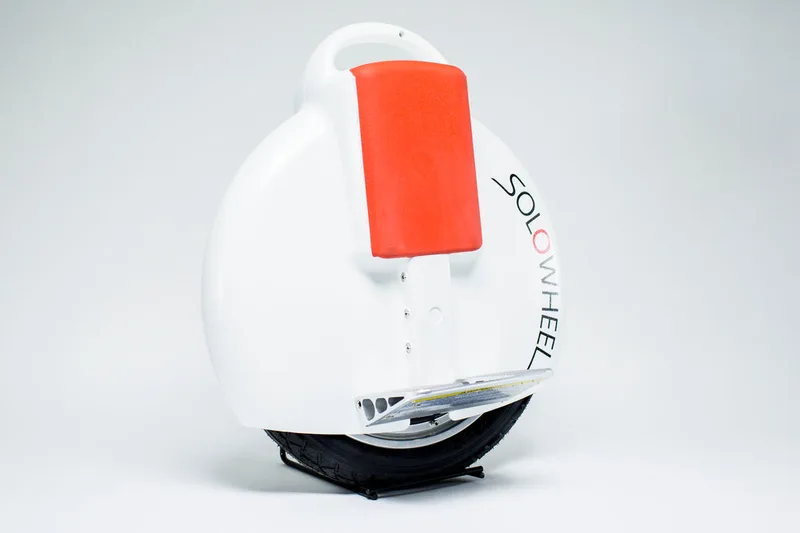
Shane Chen’s original. 14 inch wheel, around 1000W motor, roughly 122Wh battery, top speed about 16 km/h (10 mph), price $1,500-1,800. Early documentation is thin and the spec numbers should be treated as approximate.
This is the one. Chen’s patents (US 8,807,250 and descendants) became the foundation of the entire category. Finalist at ISPO Bike BrandNew 2011. INPEX award 2012. Permanent exhibit at the V&A Museum. Every Chinese manufacturer that followed marketed themselves as “Solowheel-type.” Chen successfully sued Airwheel and IPS in the US for patent infringement.
Precedent is disputed - Focus Designs SBU (2008) was self-balancing but saddle-based; Trevor Blackwell’s 2004 prototype was never commercial. Solowheel is the one that started the industry we actually have.
Airwheel X3 (2013)
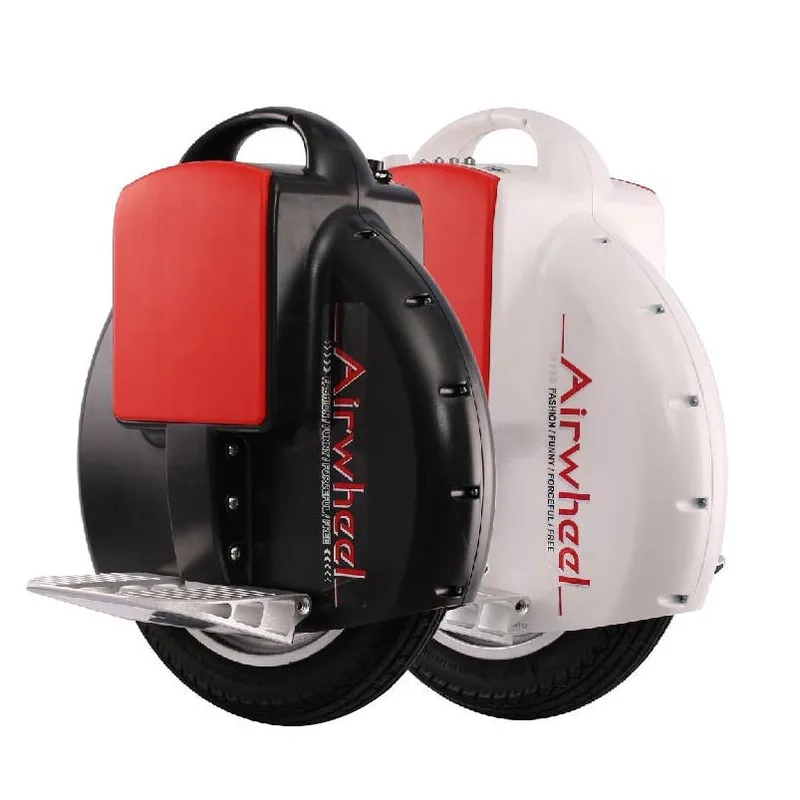
14 inch wheel, 400W peak, 170Wh Sony cells, limited to 16 km/h (10 mph), around 9.8 kg (22 lbs).
Not the best wheel. Barely safe. But this was what most Western consumers first saw on the street. At around £510 / $849, it cost a third of a Solowheel, which made it the gateway drug for a generation of riders. TechRadar captured the vibe in a single line: a first-generation product that felt like a Sinclair C5 revival. The tilt-back system plus a weak BMS produced famous faceplants above 16 km/h (10 mph). The company was named in Chen’s patent lawsuits and pivoted to electric suitcases around 2020.
In the Hall of Fame for reach, not quality. The cautionary tale is part of the record.
Era 2: Going mainstream (2015-2017)
The first generation of wheels that felt like actual products, not experiments.
Ninebot One E+ (2016)
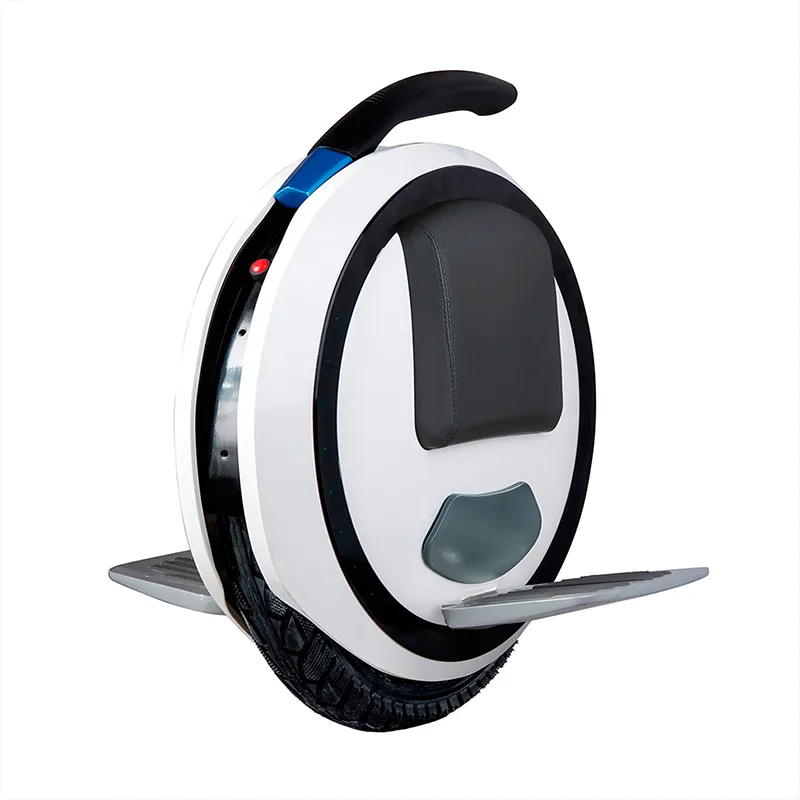
55.5V, 320Wh, 16 inch tire, 500W nominal / 1500W peak, roughly 22 km/h (14 mph), 13.8 kg (30 lbs), IP65. App control. A programmable 180 degree RGB ring that announced “this is a premium device.”
The first mass-market EUC that felt polished. Porcelain-white LEXAN shell. Xiaomi backing plus the Segway acquisition (April 2015) gave Ninebot mainstream credibility nothing else in the category had. Justin Bieber and Chris Brown were photographed on them. Veterans on r/ElectricUnicycle still remember it as “my first wheel.” The folding handle broke a lot, and 22 km/h (14 mph) looks quaint now. But for two years this defined what “premium” meant.
Inmotion V8 (2016-2017)
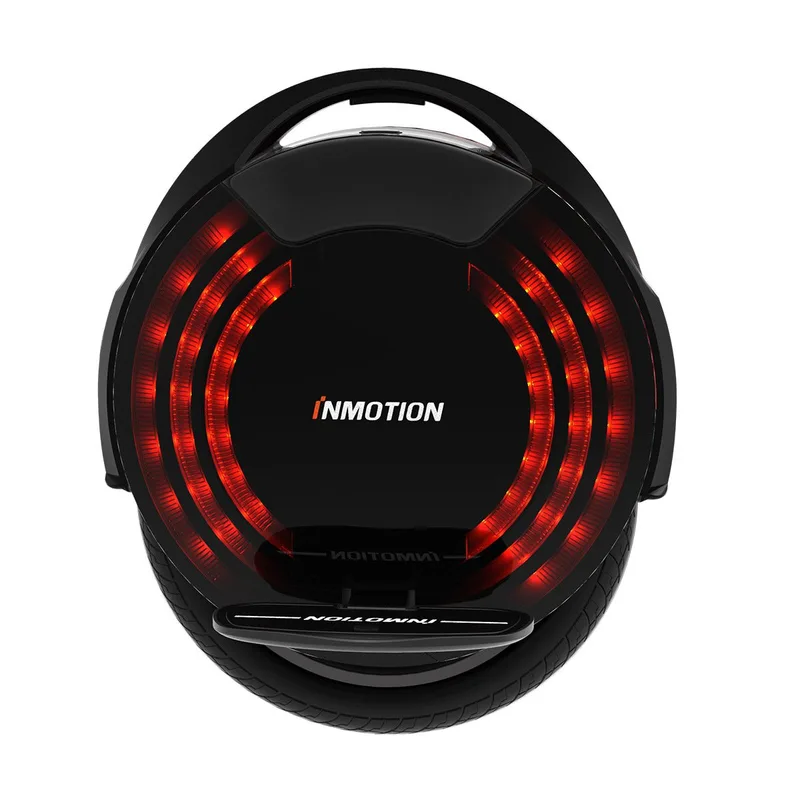
16 inch wheel, 13.6 kg (30 lbs), 480Wh, 800W nominal, around 30 km/h (19 mph). First integrated retractable trolley handle as a factory feature.
Possibly the most influential mainstream EUC ever made. That trolley handle became the industry baseline - every commuter EUC built since has one, because the V8 made riders expect it. Sub-$1000 pricing hit the sweet spot. eWheels called it the best-selling EUC through the late 2010s. KingSong responded with a direct facelift (KS-16 to KS-16C) specifically to compete.
The main complaint was the 30 km/h (19 mph) speed cap, which the V8F eventually fixed. Two generations of successors followed. The original still earns its spot.
KingSong KS-16S (2017)
67.2V, 840Wh LG cells, 1200W nominal (3000W peak), around 35 km/h (22 mph), 17.3 kg (38 lbs). Four Bluetooth speakers, retractable trolley, RGB, Smart BMS.
The quintessential KingSong commuter. This is the wheel that locked in “840Wh plus 16 inch plus trolley handle” as the category standard. Sold in the thousands. Kuji Rolls, Marty Backe, Hsiang - everyone reviewed it. The 2022 Anniversary Edition for KingSong’s 10th year confirmed what the community already knew: this was the wheel that made KingSong a brand.
Note: the earlier KS-16A and KS-16B had BMS cutout problems. The “S” revision fixed them. Don’t confuse pre-S variants with the 16S.
Era 3: The power shift - 84V (2016-2018)
Then Gotway changed everything.
Gotway MSuper V3s+ (2016-2017) - the watershed
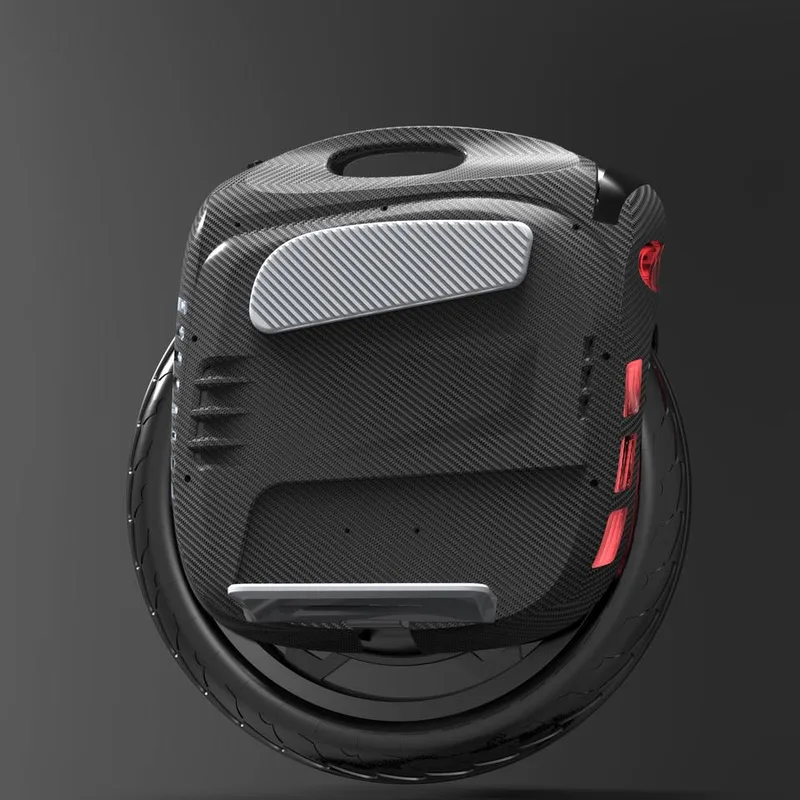
18 inch wheel, 84V (industry first at scale), 1600Wh (also a first at this price), 1600W motor, 12-MOSFET controller, around 40 km/h (25 mph), 22-24 kg (49-53 lbs).
This is the model everything after it reacted to. 84V became the platform standard for a decade. The 12-MOSFET architecture and roughly 1600W power class became the template for the KS-18L/XL, Inmotion V10, Ninebot Z10, and Gotway’s own MSX. Community history dates modern EUC performance from this release.
It also has the legendary 20-series BMS cutout problem, which produced most of the folklore faceplants forum veterans still reference. Trolley handle breakage was documented. The V3/V3s/V3s+/MS3T naming chaos was never properly resolved by Gotway. The wheel was dangerous and it was transformative. Both are true.
Gotway Monster (original 22 inch, 2016)
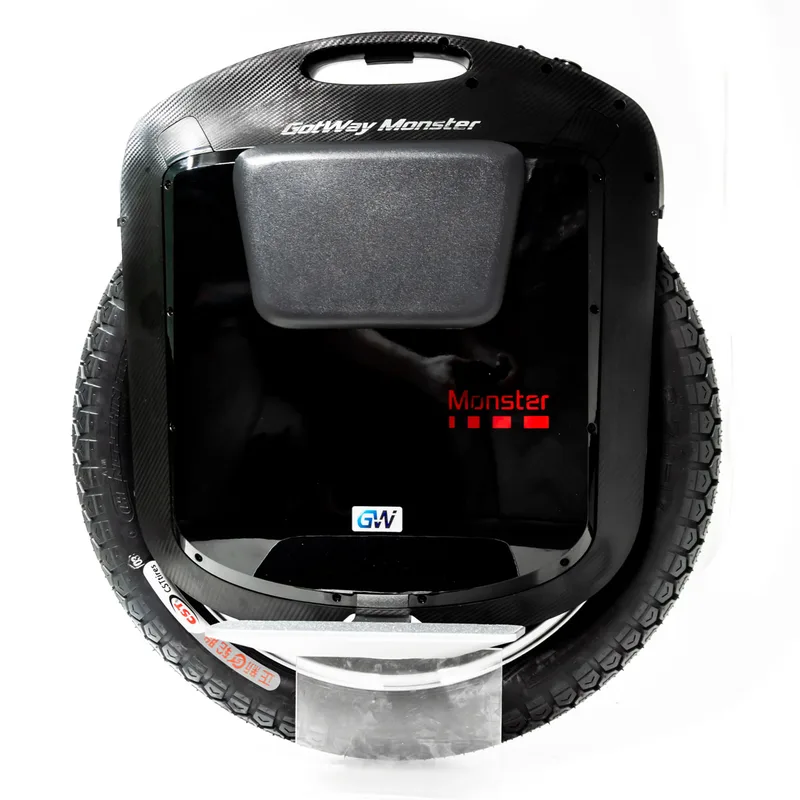
22 inch wheel - biggest in mass production at the time. 84V, up to 2400Wh Panasonic cells, 1600W, around 32 kg (70 lbs).
Gotway invented the 22 inch class. It didn’t exist before the Monster and no one else would build one for years. The original Monster still has the longest real-world range of any EUC, just from raw battery capacity. Early reviewers described it as the first enthusiast-level unicycle.
The shell is famously fragile. Waterproofing is nominal. A full charge takes 20 hours. None of that mattered - it created a category that still exists.
Gotway Mten3 (2017)
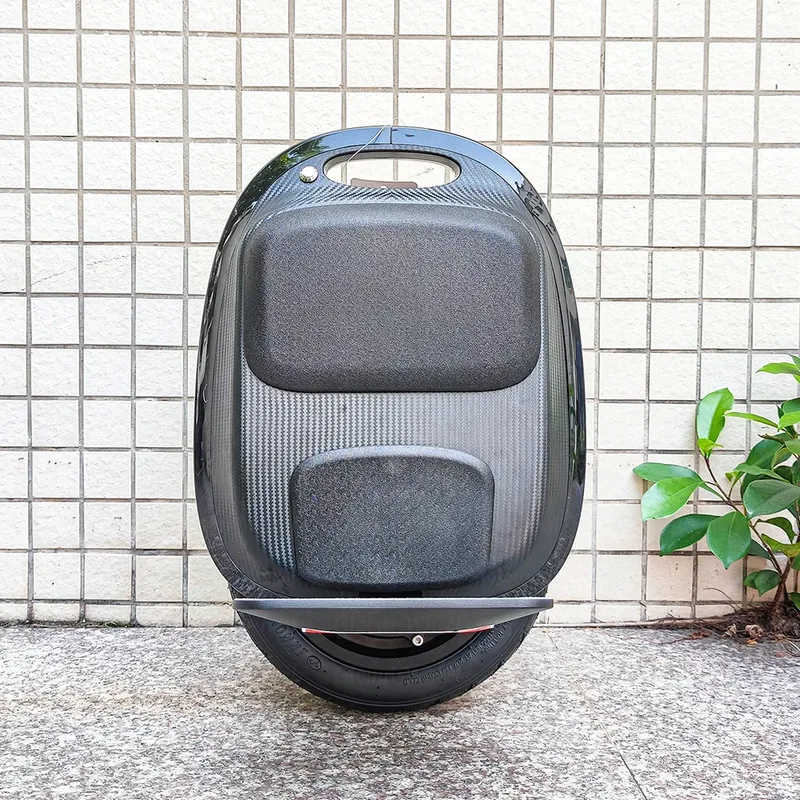
10 inch wheel (smallest in mass production), 84V, up to 512Wh, 800W, claimed 40 km/h (25 mph), roughly 10 kg (22 lbs).
The first “pocket rocket.” A sub-10 kg (22 lbs) EUC with 84V performance inside. It created the compact performance subcategory - a niche that still exists eight years later. Falls hit harder on the small wheel, and early firmware cutouts made the experience dangerous. The Mten4 (2022) is the successor but never achieved the same icon status.
Era 4: Wide tires and 100V (2018-2020)
The category split into specialists. Big batteries, fat tires, higher voltages. This era has the most inductees because more things changed at once.
Gotway MSuper X / MSX (2018)
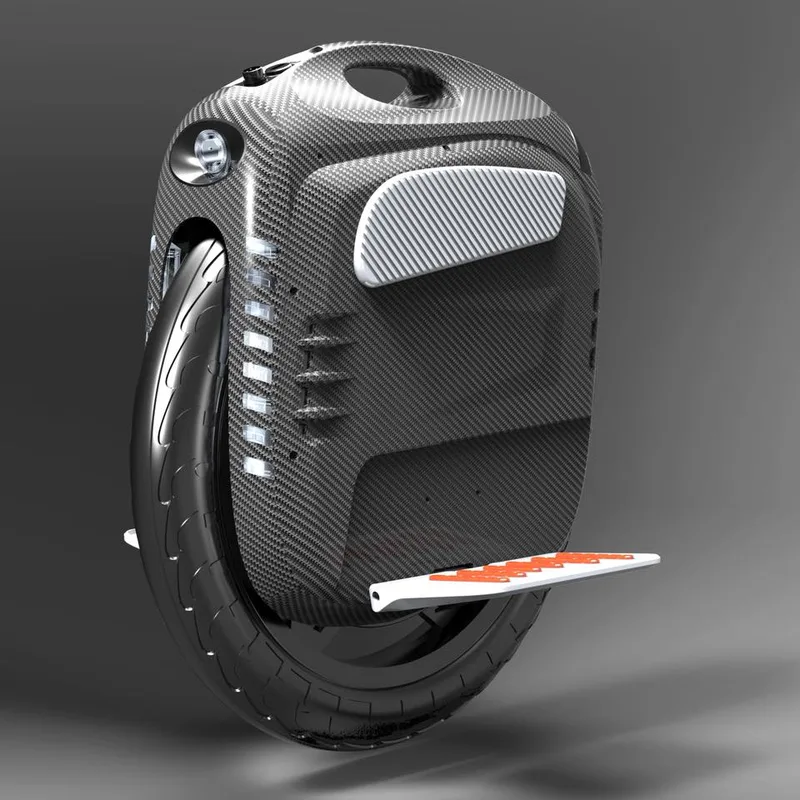
19 x 3 inch tire, 84V (later 100V variant), up to 1600Wh, 2000W nominal (4000W peak), around 50 km/h (31 mph), 23.5 kg (52 lbs).
The most loved Begode of the 2018-2020 era. The 19 x 3 inch wide-tire format, alongside the 16 x 3 Nikola, defined the modern “muscle cruiser” class. Freshly Charged ranked it as the best EUC for the money at its price point. Typical Begode reputation applies: the ride is fantastic, the build quality is questionable.
KingSong KS-18XL (2018-2019)
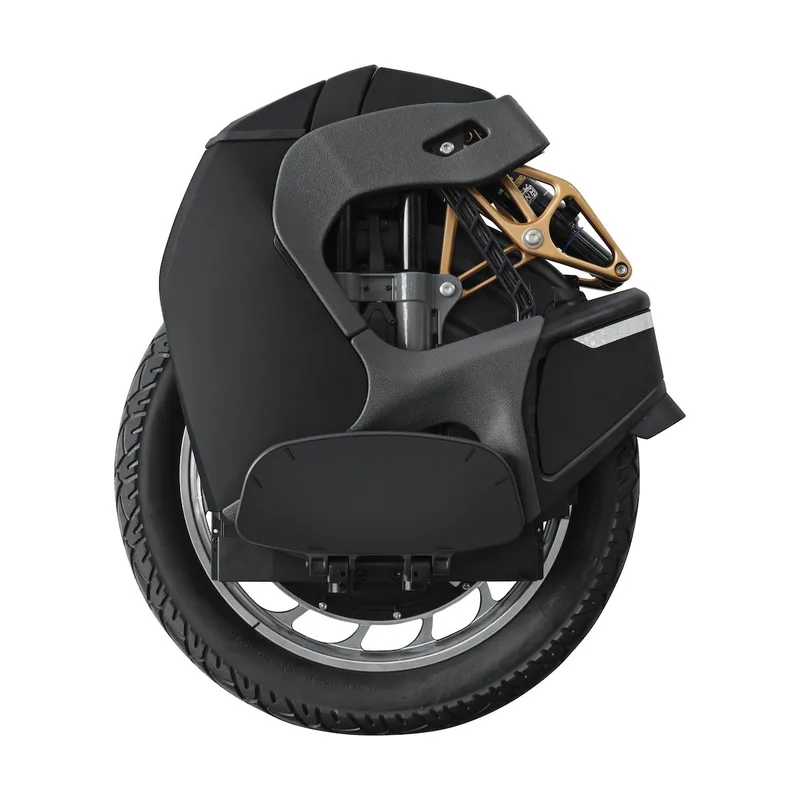
84V, 1554Wh, 2200W (4000W peak), 50 km/h (31 mph), real range around 145 km (90 mi). First 18 inch KingSong with a proper integrated trolley handle.
The range benchmark. The 1554Wh pack reset expectations for what “long range” meant. Still rideable and reliable in 2026. Marty Backe was explicit in his coverage: KingSong finally forced Gotway to ship bigger batteries. The KS-18L is the lighter reviewer favorite of the pair; the XL is the one that changed the numbers.
KingSong KS-16X (2019)
84V, 1554Wh, 2200W (4200W peak), 50 km/h (31 mph) after the 16 km (10 mi) break-in, 16 x 3 inch fat tire, around 24 kg (53 lbs).
KingSong’s fat-tire flagship. Took the KS-18XL drivetrain, dropped it into a 16 inch frame, added a 3 inch tire. Created the subcategory of “stubby torque monsters.” Direct competitor to the Nikola. The stock Dalishen tire got mixed reviews and the CST CX321 replacement lasted under 2400 km (1500 mi). A landmark regardless.
Gotway Nikola+ 100V (2019)
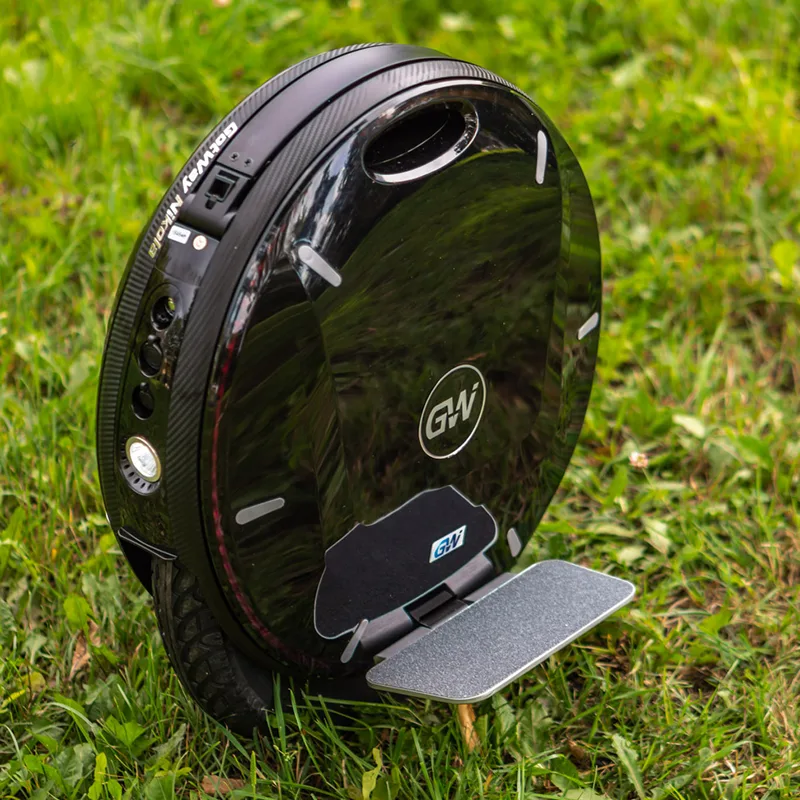
17 x 3 inch tire, 100V, up to 2100Wh, 2000W, around 65 km/h (40 mph), 26-29 kg (57-64 lbs). Built-in 25W Bluetooth speakers. Voltmeter on the side panel.
The wheel that defined the “range wars” era. 1800Wh became the new baseline. 100V scaled up from the 84V MSuper template. Oneradwheel’s 6,400 km (4,000 mi) long-term review made it a community reference for durability at distance. Sold for four years straight.
There’s a dark side. Tire changes took 5-6 hours with help. The USB port caps broke routinely. And there were battery fires during charging. Freshly Charged referenced them when reviewing the later Hero: the battery fires that had troubled the company just months earlier. That context matters - the fires were a direct motivator for the Gotway-to-Begode rebrand in September 2020.
Inmotion V10F (2018)
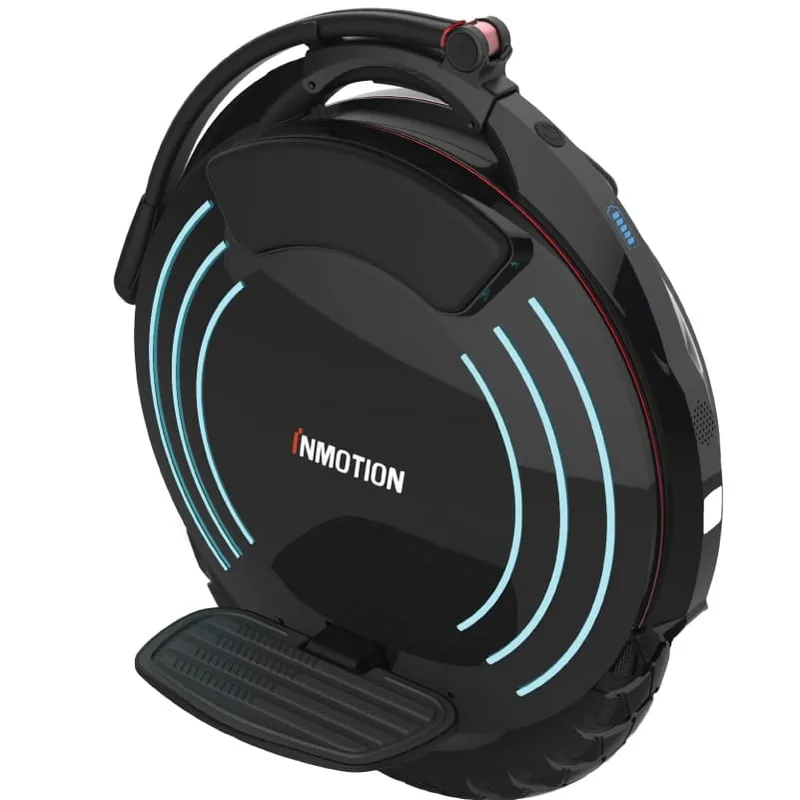
16 x 2.5 inch tire, 20.6 kg (45 lbs), 960Wh in the 84V class, 2000W nominal with around 3000W peak, 40 km/h (25 mph), IP55. Headlight three times as bright as the V8. Brake light. RGB rings. Bluetooth speaker.
The mid-range 16 inch benchmark from 2018 to 2020. The “V8 grown up.” First Inmotion to combine close to 1 kWh with slim ergonomics, premium app analytics, and automotive-style lighting. The original V10 (non-F) was short-lived and is not in the Hall of Fame - only the V10F earned it.
Thermal cutouts on long climbs are documented. Speed drops below 66% battery. Inmotion’s current website lists 4000W for the V10F, which contradicts the 2000W spec from 2018. Treat the newer number as marketing revision.
Ninebot One Z10 (2018) - the cautionary landmark
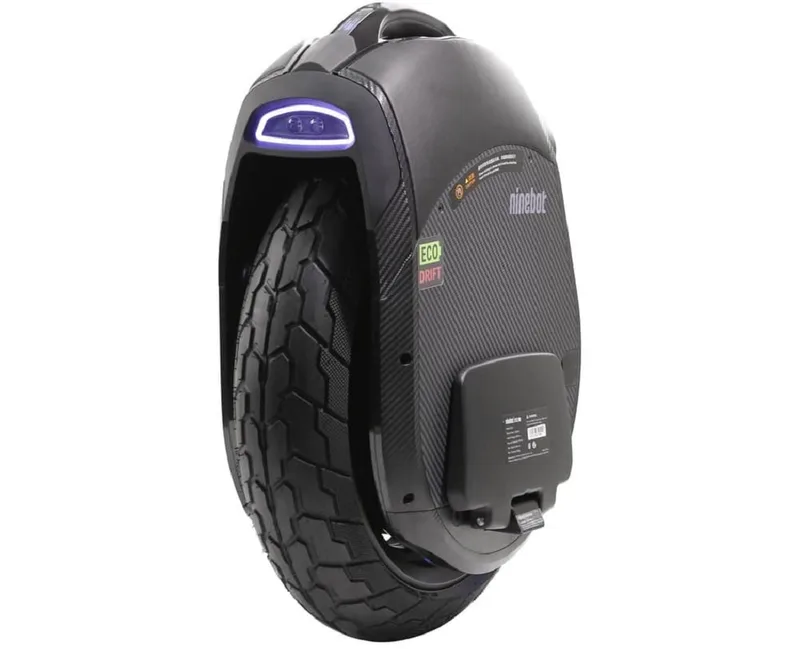
58.8V (low for the class), 995Wh, 1800W rated hub motor in an unusual design with the motor integrated into the wheel itself, 45 km/h (28 mph), 18 x 4.1 inch ultra-wide tire, around 24 kg (53 lbs), IP54.
The most important controversial EUC ever made. The Z10 popularized fat tires before the KS-16X, Nikola+, or RS. The 4.1 inch tire was the widest the industry had seen. The hub motor was a design no one else followed, but the low center of gravity and the carving feel were genuinely new.
The problems were extensive. Braking torque cutouts on steep descents - Marty Backe’s pre-production unit failed repeatedly on hill tests, and the firmware fix never came. The proprietary 18 x 4.1 inch tire had no third-party replacements; the valve stem was easily damaged. “Vampire drain” - batteries discharging at rest due to firmware - was never fixed. Replacement batteries were frequently defective. Ninebot went radio-silent on fix requests. The hub motor couldn’t be serviced. Steep learning curve.
The Z10 killed Ninebot’s credibility in the enthusiast EUC scene. The brand is categorized as “Inactive” on major forums. And it still belongs here - everything that came after in fat-tire design was a response to it.
Era 5: Suspension arrives (2020-2022)
Two wheels in April 2020 changed the category permanently. A third went the opposite direction and defined touring.
KingSong S18 (April 2020)
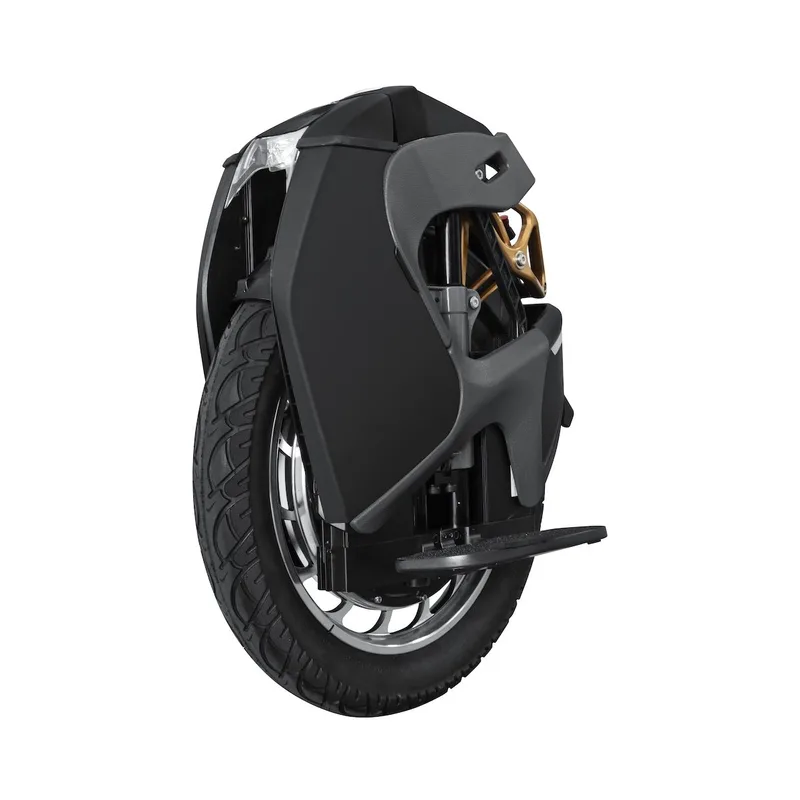
84V, 1110Wh (original M50LT cells, upgraded to P42A in the Pro), 2200W (5000W peak), 50 km/h (31 mph), 18 x 3 inch, around 24 kg (53 lbs). X-shaped linkage with air suspension, roughly 100 mm travel. Won a Red Dot Award.
The first KingSong with suspension. Announced April 7, 2020 - two days after Inmotion announced the V11 - but the S18 physically reached customers in volume first. The motocross-inspired spring design felt like a real off-road wheel, not a softened commuter. Still in the top tier of suspension wheels in 2026.
The original M50LT cells couldn’t handle high loads, which caused power sag under stress. The Pro revision fixed this with P42A cells. The “first suspension EUC” marketing is partial: the V11 was co-first in announcement; the S18 was first in shipping volume.
Inmotion V11 (October 2020)
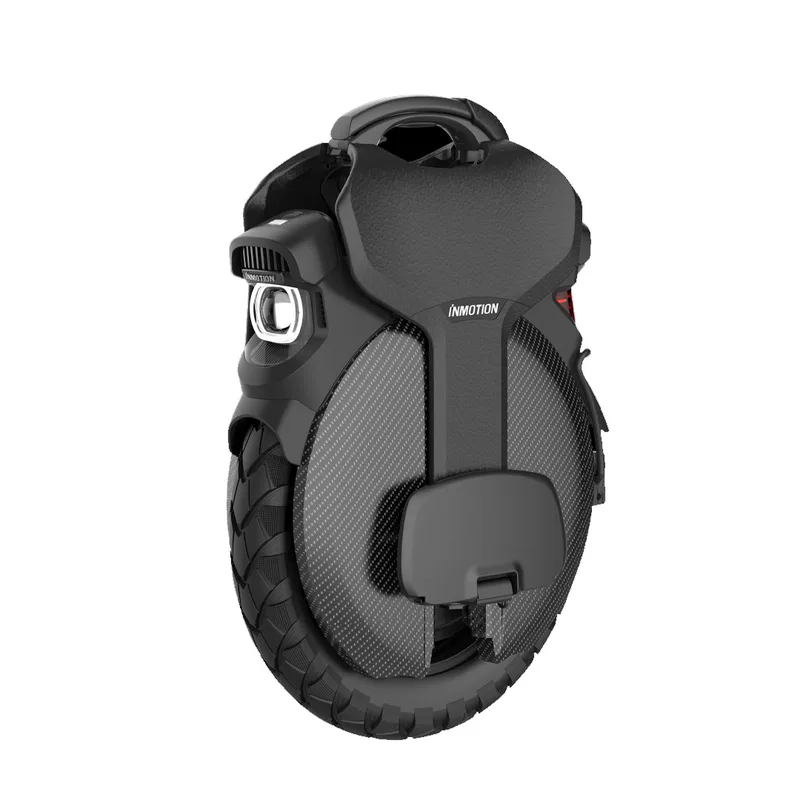
18 x 3 inch tire, 1500Wh at 84V (LG cells, smart per-cell BMS), 2200W, 50 km/h (31 mph), around 27 kg (60 lbs). 85 mm air-spring pedal suspension in a “saddle over wheel” design - the frame moves, the wheel stays planted. Integrated flip-kickstand. Fold-up lift-cutoff handle. 7800 lux headlight. Dual-port 10A charging.
The other April 2020 suspension announcement. Mass production shipped October-November 2020. Reset the roadmap of every competitor - the S22, Begode Master, and Veteran Patton all exist because of the V11.
Kuji Rolls was blunt in his comparison: KingSong’s suspension handled technical terrain better. Early bearings failed (a fix arrived in 2022 with 6916 bearings and silicone seals). The knobby tire caused problems. App and Bluetooth crashes were officially acknowledged in October 2020. The V11’s suspension has “cruiser” character, not the “dirt bike” feel of the S18. Both deserve their spots.
Veteran Sherman (OG, 2020)
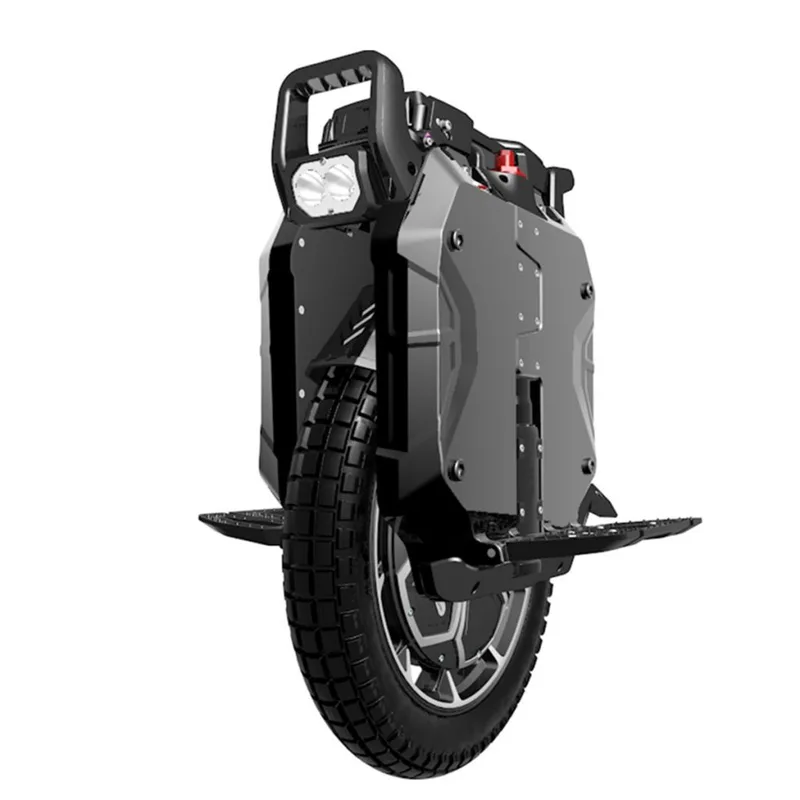
100.8V, 3200Wh (two redundant 1600Wh packs), 2500W, 20 inch wheel, around 35 kg (77 lbs). Steel roll-cage construction. Claimed about 72 km/h (45 mph), real cruise 48-55 km/h (30-34 mph). Dual 5A charge ports. Onboard LCD, no app at launch.
The first EUC that pushed past 64 km/h (40 mph) with usable range. Defined the touring / range-king category. The integrated roll-cage became LeaperKim’s visual signature. First mainstream onboard LCD dashboard. Forced Begode to respond with the EX and MSX Pro. Kuji, Hsiang, Marty Backe, Jimmy Chang all covered the launch. Larry Zarcoff’s 5,600 km (3,500 mi) long-term review became a community reference.
The high-speed wobble was well documented. Early hangers let pedals scrape; later batches revised them. The 60 mm rim is fragile under hard use. At 35 kg (77 lbs), carrying it is work. But this is the wheel that created LeaperKim as a premium brand and the template for everything that followed in long-range EUCs.
Era 6: The high-voltage wars (2022-2024)
Begode Master (V2/V3, 134V, 2022)
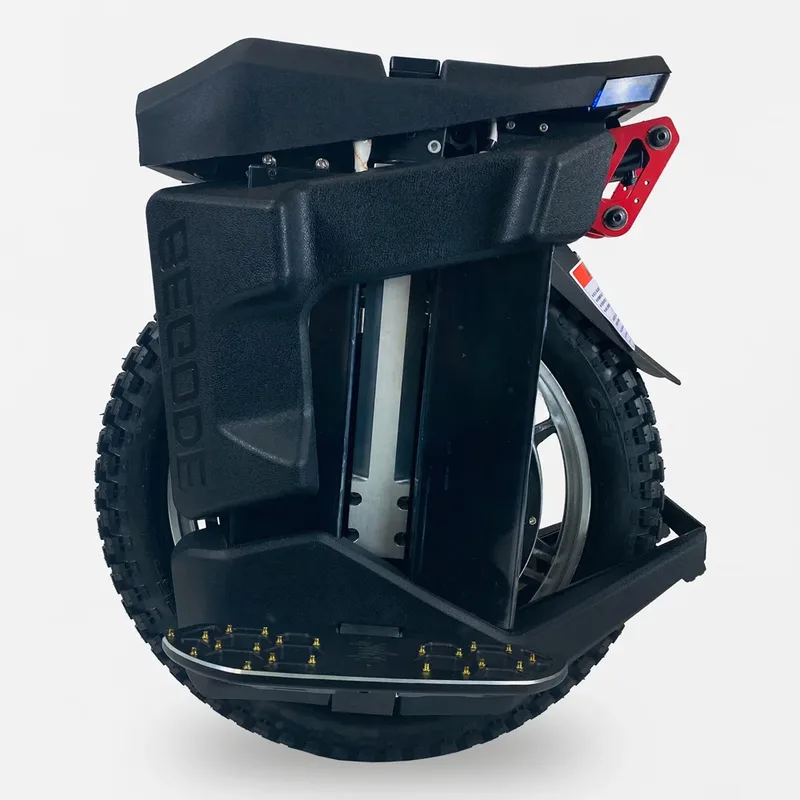
18 x 3 inch knobby (20 inch class), 134V (industry first in production), up to 2400Wh Samsung 50E, 3500W C38 HT motor, air shock with 80 mm travel, articulated arm, top speed 80+ km/h (50+ mph) - the first production EUC to break the 50 mph barrier. Around 36 kg (79 lbs). 13.1 inch die-cast pedals.
50 mph in a production EUC. First 134V platform. Direct response to the KS-S20/S22 and the opening act of the high-voltage suspension wars. After the KS-S20 fires and the S22 quality fiasco, the community quickly crowned the Master as the best suspension EUC of the era. Freshly Charged documented that shift explicitly.
The usual Begode fragility applies. Foam pads described as having the durability of toilet paper. Fragile lights. Kickstands that break. The “134V world’s first” claim is true for production, but KingSong had already reached 126V, so the marketing needs context.
Begode Master Pro line (2022-2024) - the wheel that started 555
The Master Pro line took the Master’s 134V platform into a larger, long-distance format: a 22 inch wheel class, suspension and a 4800Wh battery. The original established the format; V2 revised the suspension and battery enclosures, and V3 brought a 5kW C40 motor and controller changes. Those revisions belong to the lineage, not to a claim that V3 invented the big GT wheel. eWheels documents the V2/V3 changes; Next Gen lists the V3 configuration.
Begode Master Pro V3 - the wheel that started 555. Long rides on it made the site’s central questions concrete: how much range is usable, how much power margin remains and what happens after a fall. Its 4800Wh battery and large-wheel stability made it a benchmark for our GT riding. On my wheel, after fitting revised linkage and a coil shock, the suspension has gone season after season without routine servicing; I do not lubricate the stanchions. The weight and exposed metal kickstand remain real trade-offs. V3 has a special place in 555’s story, while its changes belong to the wider Master Pro lineage.
Era 7: The limits of useful speed (2024-2026)
The voltage race did not stop at 134V. The Veteran Lynx brought 151V into production; 168V machines followed. The Inmotion P6 pushed the headline to 235.2V. Its manufacturer lists 6kW rated power, 20kW peak and a claimed 150 km/h (93 mph) riding speed. INMOTION’s current P6 specifications describe the platform; they do not establish that 150 km/h is repeatable with a useful safety margin across riders, battery levels and conditions.
Inmotion P6 (2025) - epoch marker, verdict pending
At Apple Valley on October 12, 2025, a rider reached 81 mph (about 130 km/h) on a P6 according to INMOTION’s event report. That is a reported speed with a rider aboard, not a free-spin figure. The report does not provide independent GPS or radar data or a log of battery state, temperature and power margin. It cannot verify the advertised 150 km/h as a repeatable safe riding speed.
The P6 asks a bigger question than who can add another 10 km/h. EUC is still young enough that a flagship can feel old within a year. At this speed, what would make the next wheel meaningfully better for a rider: a higher number, or stronger evidence for control, cooling, failure response and service life? Our read is that P6 may mark a turn in that conversation. We cannot yet say it caused the industry to change course.
INMOTION was talking about the P6 by September 2025, showed it on track in October, and advertised customer shipping for December. By September 2026, that is about a year since its announcement and less time for production wheels in owners’ hands. The P6 has already raised the ceiling of advertised performance; its durability and influence on later designs still need time to become clear. Epoch marker is our provisional description of this moment, with the Hall of Fame verdict still open.
Strong candidates that didn’t quite make the cut
These have legitimate claims but fall short on one criterion - usually industry impact or breadth of adoption.
| Model | Era | Why it’s close | Why it’s not in |
|---|---|---|---|
| Gotway ACM V3/V3s+ | 84V | 16 inch companion to MSuper V3 | MSuper was the headline act |
| Gotway Tesla V2 | 84V | Best-value gateway wheel 2019-2020 | Iterative, not category-defining |
| Rockwheel GT16 v2 | 84V | First true 84V in a 16 inch frame | Limited Western distribution; brand didn’t survive |
| Gotway/Begode RS HS | 100V | First hollow-shaft motor in production | Subsumed into the MSuper lineage |
| KingSong S22 | 126V | First 126V production | Launched before it was ready; case study in overreach |
| Veteran Patton | 126V | “Master killer” in compact form | Timing placed it right before the 151V era |
| Inmotion V12 HS | 100V | First 100V Inmotion; cluster of firsts | MOSFET failures damaged the record |
| Veteran Sherman S | 100V | First Sherman with suspension | Template role; Lynx and Sherman-L took the credit |
A few of these could move to the main list with more historical distance. The S22 in particular is a serious candidate - not because it was good, but because the industry’s response to its failure shaped the next three years of the category.
Who’s explicitly out
Worth being direct about what we excluded and why.
- Focus Designs SBU (2008-2012) - first commercial self-balancing unicycle, but saddle-based. Historical precursor, not EUC
- Trevor Blackwell Eunicycle (2004) - DIY open-source prototype, saddle-based
- Ryno Microcycle (2014) - single-wheel motorcycle with saddle and handlebars. Different category
- Onewheel, hoverboards, two-wheel Segways, e-skateboards - different categories
- Firewheel F528 - verifiable brand, but quality collapse was too severe and the brand disappeared without meaningful influence
- Begode Hero - transitional model, immediately eclipsed by the Master
- Begode EX (with suspension) - failed first suspension attempt. The EX.N (no suspension) is a strong candidate; the suspended EX is not
- Veteran Abrams - the labeled 22 inch tire measures closer to 20-21 inch, and the wheel was quickly eclipsed by suspension wheels in the same price bracket
555 verdict
The Hall of Fame isn’t a shopping list. Historical importance does not make a wheel the right purchase today; many of these models are no longer sold.
What the list is: the evolution of a category. Every wheel you can buy in 2026 exists because someone built one of these first and others responded. The 134V Master couldn’t exist without the 84V MSuper V3s+. The Lynx couldn’t exist without the Sherman. The V14 is the V11 plus six years of lessons learned.
The Master Pro V3 explains where 555 began. The P6 shows how hard it has become to judge a new performance ceiling. Read both in context, respect the cautionary tales, and check the record when a new wheel claims a “world’s first.”
What changed
- Added the Master Pro lineage and the V3's role as the wheel that started 555.
- Expanded Era 7 with a provisional assessment of the Inmotion P6.